

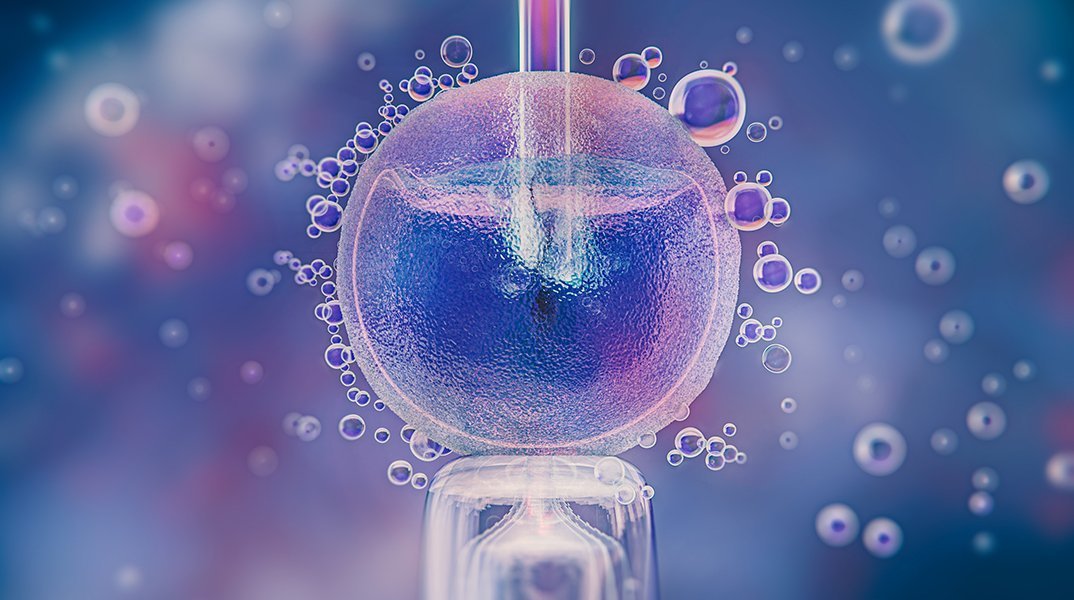
Donation of eggs

Egg donation is one of the important methods of assisted reproduction and can offer the possibility of pregnancy to women who cannot use their own eggs or have a very low chance of success with them.

This is a choice that can concern women of different ages and different medical history. In some cases the ovaries are still working, but the eggs are few or of low quality. In other cases, the ovaries no longer function normally or the woman has gone into menopause.

The decision to treat egg donation is important and often emotionally charged. For this reason, it needs proper information, personalized guidance and a realistic approach, without haste and without cultivating unrealistic expectations.

In which cases Can egg donation be recommended?

Egg donation can be a solution for women who cannot achieve pregnancy with their own eggs or for whom the chances of success with their own eggs are particularly low.

It can be suggested in cases such as:

  • women with very low ovarian reserve,
  • women producing few or low quality eggs,
  • women of advanced reproductive age,
  • women who have gone through menopause,
  • women whose ovaries no longer function normally,
  • women who do not have ovaries or have undergone ovarian removal,
  • women who have undergone anti-cancer therapy which affected the functioning of the ovaries,
  • women with repeated failed IVF attempts,
  • women with recurrent miscarriages related to egg quality,
  • Women with an increased risk of transmission of a serious hereditary disease to the child.

Egg donation is not an "easy" or standardized decision. It is a therapeutic option that must be discussed in detail with the reproductive specialist, so that the woman or couple fully understands the process, possibilities, boundaries and alternative options.

What is The egg donation?

Egg donation is the process in which eggs are used by a donor, which are fertilized in the laboratory with the partner's sperm or, where necessary, with donor sperm.

After fertilization, the embryos that are created are cultivated in the embryological laboratory and then one or more embryos are transferred to the recipient's uterus, with the aim of achieving pregnancy.

The recipient is the woman who will conceive the pregnancy. For this reason, before the treatment, appropriate preparation of the uterus and endometrium is done, in order to create the best possible conditions for embryo transfer.

How to find a suitable donor?

The selection of the donor is made with special care and in accordance with the prescribed procedures. Candidate donors are tested to assess their suitability for the process.

The aim is to have the greatest possible correspondence between the physical characteristics of the donor and the recipient, taking into account the available information and the preferences of the woman or the couple, in the context allowed.

The clinic team works with care to identify the most appropriate option for each recipient, providing the maximum possible information allowed, always with respect to anonymity and legislation.

The process is not treated as a simple matching feature. On the contrary, it requires responsibility, discretion and proper guidance, as it concerns a very personal decision for the woman or the couple.

What information can the recipient receive for the donor?

The information provided for the donor is Not determining its identity. This means that the recipient can be informed about basic characteristics and elements, but without revealing the identity of the donor.

The information that can be given usually includes:

  • the age,
  • the eye color,
  • hair color,
  • the body type,
  • skin tone,
  • the height,
  • body mass index,
  • the educational level,
  • the profession,
  • interests or hobbies,
  • relevant information from the medical history,
  • any allergies.

Providing this information helps the recipient to feel more secure and informed, without violating the anonymity of the process.

How does the process take place?

What does the treatment process include?

Egg donation therapy involves parallel preparation of the donor and the recipient.

The donor receives medication for ovarian stimulation, similar to that used in an IVF cycle. The goal is to develop more follicles and collect mature eggs.

At the same time, the recipient undergoes endometrial preparation therapy, so that the uterus is ready to receive the fetus. This preparation is based on the individual medical history, the hormonal image and the needs of each woman.

When the eggs are collected by the donor, they are fertilized in the laboratory with sperm from the partner or with donor sperm, as the case may be. The embryos that are created are monitored and cultivated in the laboratory.

Then, the embryo transfer is carried out in the recipient's uterus. The procedure is short, does not usually require anesthesia and is done with a thin catheter, under appropriate conditions.

After the embryo transfer, detailed instructions are given and the appropriate time for the pregnancy test is planned.

Will the treatment be anonymous?

Yes. Egg donation is anonymous. The donor and the recipient do not meet and the identity of one is not revealed to the other.

Nevertheless, the necessary information concerning the donor is registered in the clinic's file, in accordance with the prescribed procedures. The recipient may receive non-identifying information, i.e. elements that do not reveal the personal identity of the donor.

Anonymity is a key element of the process and ensures the protection and privacy of all involved.

Is there Counseling guidance?

Egg donation is not just a medical procedure. It is a decision that can have emotional, moral, social and legal ramifications.

For this reason, counseling guidance is particularly important. From the first visit, the woman or the couple have the opportunity to discuss in detail all the issues that concern them.

The discussion may include:

  • the medical stages of treatment,
  • chances of success,
  • the choice and anonymity of the donor,
  • moral and emotional dimensions,
  • the legal framework,
  • alternative treatment options,
  • realistic expectations from the process.

Guidance is not limited only before treatment. It is important that the woman or the couple have support both during and after the process is completed.

chances of success in egg donation

Egg donation can offer high chances of success in selected cases, especially when the main problem concerns the quality or quantity of the woman's eggs.

However, success does not depend only on the age or quality of the donor's eggs. Other factors, including:

  • the state of the uterus,
  • endometrial quality,
  • the quality of the sperm,
  • Embryological development,
  • the recipient's medical history,
  • past miscarriages or failed attempts,
  • accompanying health problems.

For this reason, each incident must be evaluated separately. Responsible information is not based on general promises, but on a careful assessment of the real data of each woman and each couple.

Specialized care by Ioannis Sklavounos

Egg donation therapy requires experience, delicate handling and substantial personalization. It is not a simple technical process, but an overall therapeutic course that needs medical precision, human approach and respect for each woman's personal path.

The Obstetrician-Gynecologist Ioannis Sklavounou It has 10 years of training in England and specialization in reproductive medicine, infertility and fetal uterine medicine. His many years of training in demanding medical environments abroad have provided him with substantial experience in the management of complex and difficult infertility incidents.

In egg donation, proper design is crucial. The doctor personally deals with each case, devoting time to investigating, informing and choosing the most appropriate therapeutic strategy. His approach is based on scientific documentation, attention to detail and care without discounts.

His experience in dealing with demanding incidents, personal engagement with each couple and high success rates are important elements of his medical course. At the same time, special importance is given to honest and realistic information. Unrealistic expectations are not cultivated, but clear guidance is provided on real possibilities, limits and next steps.

The goal is for every woman and every couple to feel that they have by their side a doctor who deals essentially, explains clearly, spends time and deals with each case with responsibility, respect and human care.

Ioannis A. Sklavounos MD MSC DFFP
Obstetrician Surgeon Gynecologist
Specialists & Retrained in Great Britain
T.Senior Clinical Fellow – Liverpool Woman’s Hospital UK

IVF

Bibliography

  1. European Society of Human Reproduction and Embryology — Eshre.
    Guidelines, Consensus Documents and Recommendations.
  2. Eshre.
    Guideline on Ovarian Stimulation for IVF/ICSI
  3. Eshre Working Group.
    Good practice recommendations for information provision for those involved in reproductive donation. Human Reproduction Open, 2022.
  4. American Society for Reproductive Medicine — ASRM.
    Repetitive Oocyte Donation: A Committee Opinion.
    Fertility and Sterility, 2020.
  5. American Society for Reproductive Medicine — ASRM.
    Financial Compensation of Oocyte Donors: An Ethics Committee opinion.
  6. Human Fertilisation and Embryology Authority — HFEA.
    using donated eggs, sperm or embryos in treatment.
  7. Human Fertilisation and Embryology Authority — HFEA.
    Egg Donation: A factsheet.
  8. National Authority for Medically Assisted Reproduction — EIAYA.
Book an Appointment