

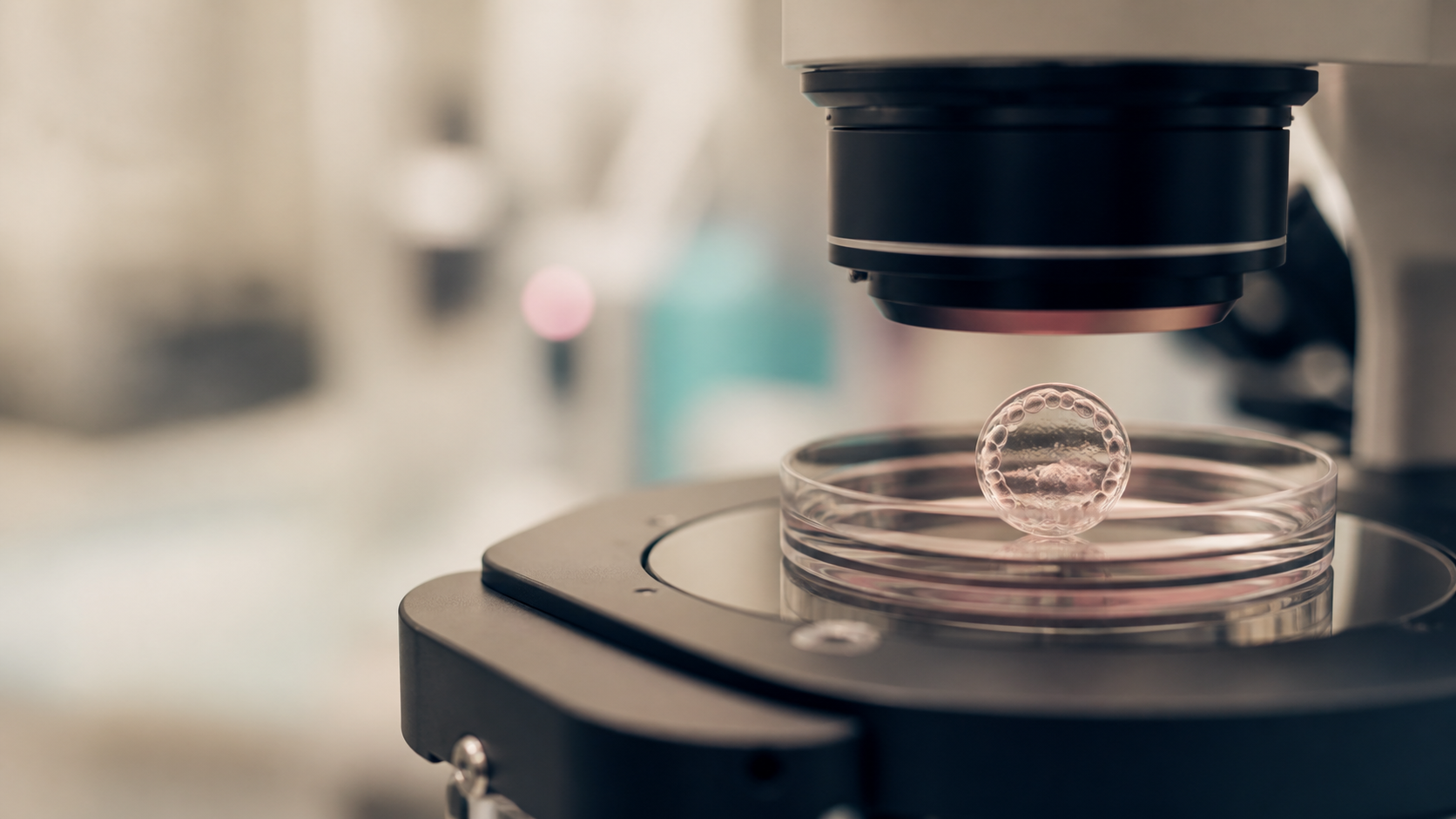
Every couple undergoing IVF hopes to hear the same words: “You have excellent embryos.” But what exactly makes one embryo appear more promising than another?
The answer is far more complex than many people realise. Embryo quality is not determined by a single factor, but by a series of biological events that begin long before fertilisation.
It Begins with the Egg
The egg provides almost everything the embryo needs during the first few days of life. It contributes half of the chromosomes, energy-producing mitochondria, proteins, messenger RNA and many molecular components that drive early development.
Egg quality is therefore the most important single determinant of embryo quality. As women age, chromosomal errors in the egg become more likely, which is one of the main reasons embryo quality declines with maternal age.
The Contribution of Sperm
Although the egg has the dominant role at the earliest stages, sperm quality also matters. Sperm contributes the other half of the genetic material and the centrosome, which is essential for the first cell divisions.
Severely impaired sperm quality, increased DNA fragmentation or certain genetic abnormalities may reduce embryo development and increase the risk of implantation failure or miscarriage in selected cases.
Fertilisation Is Only the Beginning
Successful fertilisation does not guarantee normal development. During the first days, the embryo undergoes a remarkable series of cell divisions, with biological quality-control mechanisms influencing whether development continues or stops.
Many embryos naturally arrest because chromosomal abnormalities prevent normal development. This is part of normal human reproductive biology.
How Do Embryologists Assess Embryos?
Modern embryology laboratories use internationally recognised morphological criteria, including:
- the number and symmetry of the cells,
- the degree of fragmentation,
- the rate of development,
- and, at the blastocyst stage, the appearance of the inner cell mass and trophectoderm.
These observations help estimate developmental potential, but morphology cannot show whether an embryo has the correct number of chromosomes. An excellent-looking embryo may still be abnormal, while a less impressive embryo may result in a healthy baby.
Does an Excellent-Looking Embryo Always Implant?
No. Appearance increases the probability of success but cannot guarantee pregnancy. Implantation depends on several factors working together:
- embryo competence,
- endometrial receptivity,
- synchronisation between embryo and uterus,
- the hormonal environment,
- and, in some cases, additional maternal factors.
Successful implantation occurs only when all these biological processes are aligned.
Can Embryo Quality Be Improved?
Once an embryo has formed, its intrinsic biological quality cannot be changed. The greatest opportunity to influence quality exists before fertilisation.
Optimising health, avoiding smoking, maintaining a healthy weight, treating medical conditions and selecting an appropriate stimulation protocol may help obtain the best possible eggs and sperm. Many proposed interventions still require stronger evidence before routine use.
Looking Beyond the Laboratory Grade
Embryo grading is important, but it should not be interpreted alone. True developmental potential reflects egg and sperm quality, chromosomal integrity and the complex biological processes of early life.
Experienced specialists assess embryo quality within the entire clinical picture, not by laboratory grade alone. The goal is not simply to create beautiful embryos; it is the birth of a healthy baby.